


What Is BPC-157?

Disclaimer: Information provided is for research and educational purposes only. BPC-157 is not approved by the FDA or any regulatory agency for human use.
Introduction
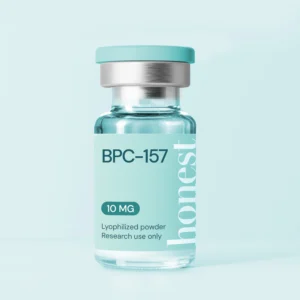
BPC-157 (Body Protection Compound 157) is a synthetic peptide of 15 amino acids, derived from a protein fragment found in human gastric juice. Discovered in 1993, it has shown broad tissue-repair effects in preclinical models, including muscle, tendon, nerve, and gastrointestinal healing.¹ ²
Laboratory data indicate BPC-157 promotes healing in muscles, tendons, nerves, and the gastrointestinal tract, acting via angiogenesis, modulation of the nitric-oxide system, and anti-inflammatory pathways.² ³
BPC-157 Fast Facts
Type: Synthetic pentadecapeptide
Sequence: Gly-Glu-Pro-Pro-Pro-Gly-Lys-Pro-Ala-Asp-Asp-Ala-Gly-Leu-Val
Discovered: 1993, Zagreb, Croatia (Dr. Sikiric)
Key Features: Oral stability, multi-system healing
Primary Research: Rodent models of GI, musculoskeletal, neuroprotection
Chemical Structure & Origin
Named for its Body Protection Compound origin and its position as fragment number 157, BPC-157’s 15-amino-acid sequence confers unusual stability—even in the acidic stomach environment⁴. BPC-157 peptide structure and amino acid sequence
Discovery of BPC-157 and Research Milestones
In 1993, Dr. Predrag Sikiric and colleagues at the University of Zagreb first described BPC-157 in Journal of Physiology-Paris, detailing its stomach-stress organoprotection hypothesis and beneficial effects in rodent gastric-injury models⁴. Their isolation of BPC-157 from human gastric juice protein laid the foundation for decades of follow-up work on tissue regeneration and organ protection.
Year
Study & Source
Key Finding
1993
Sikiric P. et al., J. Physiol.-Paris (PMID 8298609)⁴
Ulcer healing, organoprotection
1997
Sikiric P. et al., Curr. Pharm. Des. (PMID 23755725)²
NO-system modulation, blood-pressure effects
2003
Staresinic M. et al., J. Orthop. Res. (PMID 14554208)⁵
Accelerated Achilles tendon repair
2014
Sikiric P. et al., Curr. Pharm. Des. (PMID 23755725)²
Broad healing across multiple injury models
Note: All evidence to date is from animal or in vitro models; human clinical trials are pending.
How BPC-157 Differs From Other Peptides
Peptide
Main Use
Oral?
Key Difference
BPC-157
Multi-tissue repair
Yes
Stable in GI tract; broad activity
TB-500
Soft tissue repair
Yes
Targets actin, cell migration
GHK-Cu
Skin & cosmetic
No
Copper-binding; collagen stimulation
Conclusion & Key Takeaways
BPC-157 is a research peptide discovered in 1993 that shows broad healing potential in preclinical models. Its oral stability and multi-system effects make it unique among peptides, but clinical approval and human data are still pending.
FAQs About BPC-157
Who discovered BPC-157?
Dr. Predrag Sikiric and his team at the University of Zagreb, Croatia, in 1993⁴.
Is BPC-157 natural?
It’s a synthetic fragment based on a gastric-juice protein; it does not occur independently in the body.
Is BPC-157 FDA-approved?
No—BPC-157 remains investigational and is not approved by any regulatory agency.
Where can I learn more?
Read our in-depth history of BPC-157 for original studies and timelines.